
Dominus Gladiatus Injuries & Infirmary Guide
How injuries work in Dominus Gladiatus: arena injury chances, when injuries are revealed, Infirmary recovery, early exit rules and death consequences.
Injuries are the main way a good run loses a week. They are not random punishment: the game exposes the risk before you book, and most injuries come from entering an arena with high Fatigue or accepting a fight your fighter cannot win. The Infirmary repairs the damage, but the recovery time is the real cost.
Quick answer
Injuries are revealed when the gladiator returns to the Ludus. The Infirmary heals them over multiple days. Do not leave early: Patch 5 removes only the injuries covered by the time served and restores Fatigue to its pre-admission value. Prevent injuries with Fatigue 0-2 bookings and avoid To-the-Death fights with your main earner.
What are the injury chances?
Two layers stack in the current build:
- Base fight result: Patch 1 set a 10% injury chance on a win and 40% on a loss.
- Fatigue risk: Patch 3 lists arena injury risk at 25% for Fatigue 3, 50% for Fatigue 4 and 100% for Fatigue 5.
The practical reading is that low-Fatigue wins are the safest state, low-Fatigue losses are still dangerous, and anything at Fatigue 4-5 is a scheduled injury. The fight result roll and the fatigue roll are not a simple addition you can calculate from the tooltip, so do not treat "25% at Fatigue 3" as the final number. Treat it as the warning label.
Official source: Dominus Gladiatus patch notes ↗
When are injuries revealed?
Patch 3 changed injuries to be revealed only after the gladiator returns to the Ludus. You will not see the full damage on the arena results screen.
That delay matters for planning. A fighter can win a purse and still come home with an injury that removes them from training. Do not book a second fight on the same day until you have returned to the Ludus and checked the INFO card.
The arena readiness checklist → includes this return-to-Ludus step for a reason.
How does the Infirmary work?
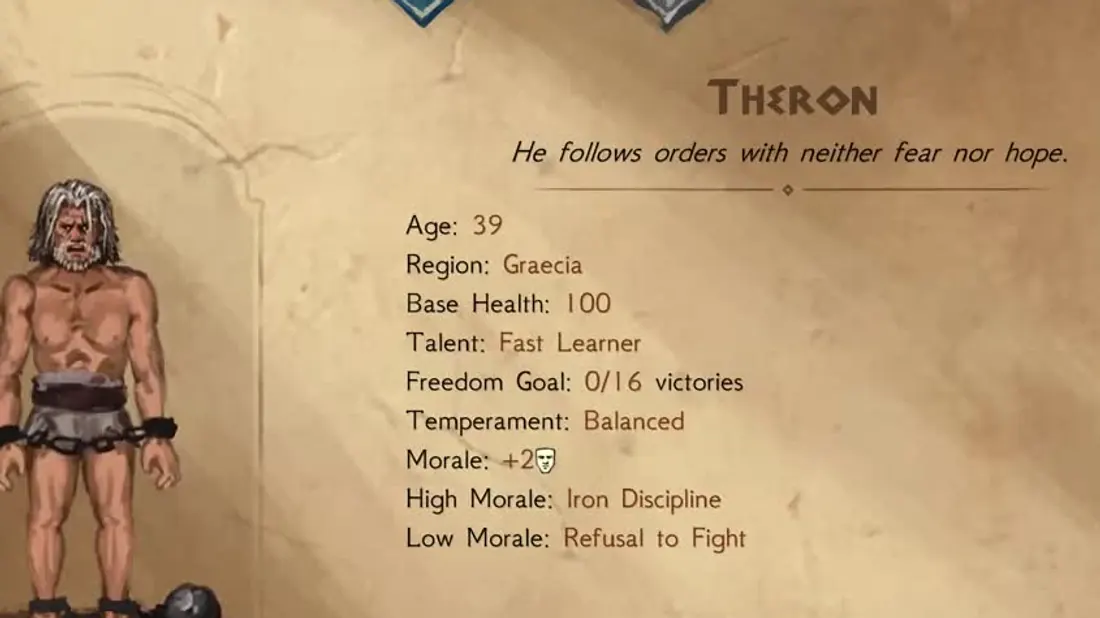
The Infirmary is a BUILD tab structure. Admission starts a recovery timer based on the injury. The gladiator is unavailable for arena work and training while admitted.
The key rule is the early exit:
- Finish the stay: injuries are removed normally.
- Leave early: injuries proportional to the time already served are removed, and Fatigue is restored to its pre-admission value.
Early exit is not a shortcut. It is a partial refund on the admission, with the fighter still carrying the remaining injury and the old Fatigue. In most cases you pay twice: once for the partial stay and again for the second admission.
Do not admit a fighter you need for a purse in the next two days. Either finish the stay or delay admission until the schedule allows it.
What happens if a gladiator dies?
Death is permanent. The Day 1 notes mention a separate funeral for each dead gladiator, and Patch 5 made deaths affect the morale of the whole Ludus. The Pre-Launch notes also warn that equipment can drop on death.
Three consequences follow:
- The arena purse is not pure profit. A death removes the training investment, the equipment and a morale contributor.
- The funeral is a morale event. Expect a temporary dip across the roster, not just on the dead fighter's replacement.
- To-the-Death is a roster decision. Do not risk the only copy of your best weapon or your highest-rank fighter for a normal purse.
The morale guide → explains how to stabilise the Ludus after a death.
How do critical injuries and low morale interact?
Patch 7 reworked critical injuries, low morale and suicide risk. The important change: a gladiator at maximum injury no longer commits suicide immediately. Instead, the risk rises for gladiators who stay at low morale for several days.
That means a heavily injured fighter is not automatically lost. The danger is the combination:
- Critical injury.
- Prolonged low morale.
- No Pleasure House or positive event to reset the mood.
- The suicide risk percentage displayed on the INFO card.
If you see the risk climb, stop the arena schedule and fix morale first. The morale guide → covers the recovery options.
A long Infirmary stay costs coins while removing your earner. Keep a reserve that covers several days of upkeep plus one full healing cycle.
How do you prevent injuries?
Prevention is cheaper than healing. The checklist:
- Book at Fatigue 0-2. At 3 the risk is already 25%; at 5 it is 100%.
- Read the opponent's class and Health. A bad matchup increases the number of hits you take, which increases the chance of a loss and the 40% loss injury roll.
- Avoid To-the-Death for normal purses. Surrender is a safety valve.
- Return to the Ludus before booking again. Injuries are revealed there.
- Do not train an injured fighter. The Infirmary stay is the priority.
- Keep the reserve. The injury is not the emergency; the inability to pay for it is.
What does an Infirmary stay cost?
The build panel shows the Infirmary as a structure with a purchase cost and a usage cost, similar to the Quarters. The exact daily fee depends on the injury and the building level. The important budgeting rule is to reserve enough for a full stay, not just the admission.
A fighter who earns 40-55 coins per purse can repay a stay in one or two fights. A fighter who earns 20-coin exhibitions cannot. That is why the early roster should focus on quality over quantity.
Should you sell an injured gladiator?
Sometimes. An injured gladiator still consumes 1 coin per day and occupies training/Infirmary capacity. If the injury is long, the fighter is low Health, and the roster has a healthy replacement, selling can be rational.
Do not sell your only trained fighter to save a few coins. The replacement cost in training time is usually higher than the upkeep saving.
Official source: Dominus Gladiatus achievements ↗
Official source: Steam store ↗
FAQ
Can injuries heal without the Infirmary? The Infirmary is the dedicated healing path. Idle time may recover some conditions, but the Infirmary is the reliable method and the source of the Back on His Feet achievement.
Do injuries carry into the next fight? Yes. An injured gladiator is not fully combat-effective. Clear the injury before booking a serious purse.
Does leaving the Infirmary early save money? It saves the remaining daily fee but leaves the injury and restores the old Fatigue. In practice it usually costs more because you need a second stay.
Can a gladiator die from an injury? Deaths occur in the arena, especially in To-the-Death bouts. Patch 7's suicide-risk rework is a separate morale mechanic, not a direct injury death.
More Dominus Gladiatus Guides
Dominus Gladiatus best build guide: Health vs damage, skill order for Murmillo, Secutor and Scissor, Veteran bonuses, equipment priorities and team-fight roles.
Dominus Gladiatus best gladiators tier list: Health, talents, temperament and class value, plus when to buy, keep or sell a recruit from the Slave Market.
Dominus Gladiatus class guide: Murmillo, Secutor and Scissor strengths, skill synergies, Retiarius and Hoplomachus matchups, and the best first class.
How crowd favor works in Dominus Gladiatus: Liked, Indifferent and Disliked calls, two calls per fight, stones and food, favored immunity and Ruthless rules.
All six Dominus Gladiatus Domini: Titus Aurelian, Khepri Setekh, Cassius Lysandros, Aurelia Zahara, Livia Calpurnia and Decimus Amborix, powers and counterplay.
Twelve Dominus Gladiatus tips that prevent early run deaths: fatigue management, market discipline, morale warnings, crowd calls and upkeep traps.
How Dominus Gladiatus endgame contracts work after the Grand Tournament: 10-fight batches, 1v1 to 5v5, beast spectacles, rising upkeep and retirement.
Dominus Gladiatus equipment guide: weapon, shield, helmet, legs, armband and pants stats, block chance vs damage reduction, weapon range and spending priority.