
Dominus Gladiatus Equipment Guide: Block & Armor
Dominus Gladiatus equipment guide: weapon, shield, helmet, legs, armband and pants stats, block chance vs damage reduction, weapon range and spending priority.
Equipment in Dominus Gladiatus is a small set of slots with a few stats that matter: weapon damage, block chance, block damage, damage reduction and armour. The trap is buying the most expensive item instead of the stat that fixes your fighter's weakness. A 75-coin helmet does nothing for a Scissor who dies before blocking.
Quick answer
Buy weapon damage first on a damage dealer, block chance first on a shield class, and damage reduction on the helmet and legs. Do not replace a working shield for a marginal weapon upgrade. Check the level requirement before spending; an item your fighter cannot equip is wasted coins.
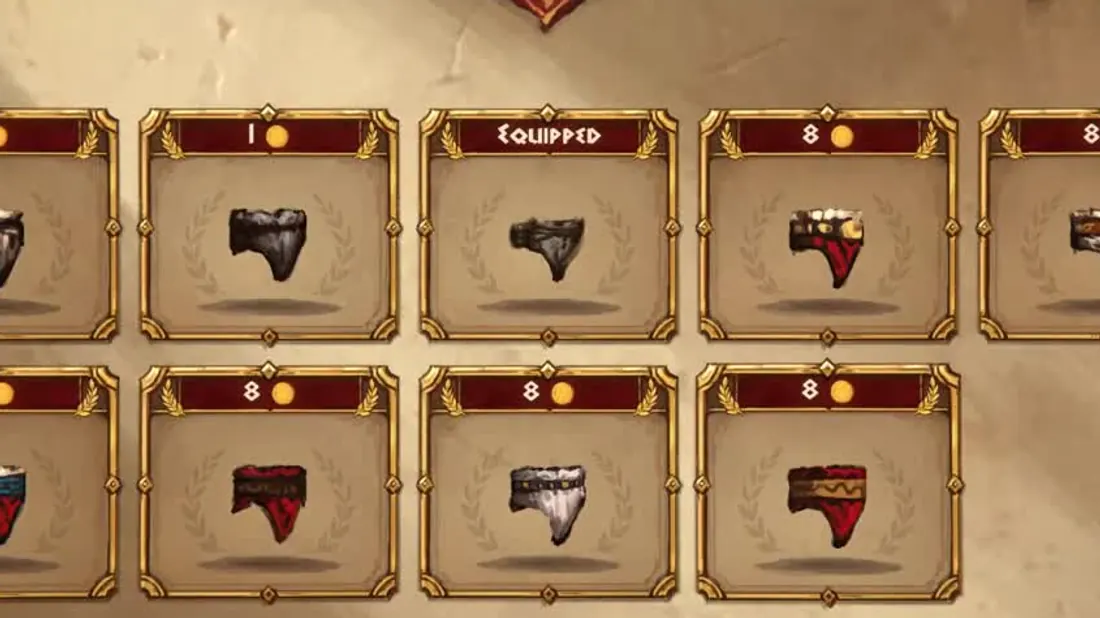
What slots does a gladiator have?
The EQUIPMENT panel shows six slots:
| Slot | Primary stats | Priority |
|---|---|---|
| Weapon | Damage, block chance, block damage | 1 for damage dealers |
| Off-hand / shield | Block chance, block damage, damage reduction | 1 for shield classes |
| Helmet | Armour, damage reduction | 2 |
| Legs | Armour, damage reduction | 3 |
| Pants | Armour, damage reduction | 4 |
| Armband | Block chance, damage reduction | 5 |
The exact stat rolls vary by item. The panel shows the item's block chance, block damage and damage reduction in its tooltip; read those before comparing price tags.
Official source: Dominus Gladiatus store page ↗
What do the defensive stats actually do?
The build I checked showed:
- Block chance: the probability of blocking an incoming hit. Examples: Wooden Club 40% chance to block 2 damage; Gold Trim Wraps 25% chance to block 1.
- Block damage: how much damage a successful block prevents.
- Damage reduction: a flat reduction applied to incoming damage. The full-run footage showed values such as 30 damage reduction on a body piece, with helmet and legs in the 25-35 range.
- Armour: the underlying defence value. Patch 6 changed the Defense skill to increase the Armor provided by each armour piece.
Block chance is the premium stat because it can prevent a hit entirely. Damage reduction is the floor: it softens every hit, including the ones you fail to block. Armour supports both.
The exact interaction between block, armour and damage reduction is not published. Treat the tooltip values as the source of truth and test upgrades in safe fights.
Why is block chance so valuable?
A block is a binary outcome: the hit is prevented or reduced by the block damage value. On a shield class, a high block chance can shut down an opponent's damage window entirely.
The build showed shields and items with 40% and 60% block chances, and block damage values such as 8. A 60% block chance with 8 block damage is a different defensive plan from a 25% block chance with 1 block damage.
For a Murmillo or Secutor, block chance is the first stat to upgrade. For a Scissor, damage is first; block is a secondary survival stat.
If your Murmillo already blocks 40% of hits, a marginal weapon upgrade is worth less than preserving the shield. Replace the weapon when the damage breakpoint matters, not because the shop has a new model.
How does weapon damage work?
Weapons have fixed damage in the current build; the Pre-Launch notes say the old random damage range was removed. That makes weapon comparisons straightforward: higher listed damage is better, unless it costs you block or a level requirement.
Weapon families also have range rules. Spears and tridents have a minimum attack range, and Patch 6 added weapon range to the tooltip. A spear user wants to keep distance; a Scissor wants to close it. The weapon choice therefore affects the class plan, not just the damage number.
What should you buy first?
A spending order that works for most rosters:
- A weapon the main fighter can equip. Damage first for Scissor/Secutor; a shield class can wait.
- A shield/off-hand with block chance. This is the biggest defensive upgrade for Murmillo/Secutor.
- Helmet and legs with damage reduction. These slots carry the largest armour values.
- Pants and armband as fillers. Buy when the price is low or the stat fixes a gap.
- A second weapon for the counter-pick. Do not equip the backup with the carry's only weapon.
Do not buy a full set for a fighter you might sell. Equipment is lost on death and does not transfer automatically to a replacement unless you unequip it.
How much should you spend?
The build showed item prices at 10, 25, 40 and 75 coins, with level requirements. A 75-coin item is a meaningful fraction of a 120-coin opening purse, so the purchase has to solve a real problem.
A simple budget rule:
- Opening: one weapon under 25 coins, one shield if the class uses it.
- Mid-game: upgrade the weapon at the second damage breakpoint; keep the shield.
- Tournament: one high-tier weapon for the carry, one defensive set for the front-line fighter.
- Post-game: replace only what a death actually removed.
The money guide → compares equipment spend with upkeep and training costs.
What happens to equipment on death?
The Pre-Launch notes warn that equipment can drop on death. The Day 1 notes add a funeral for each dead gladiator. That makes high-tier gear a risk asset, not a permanent investment.
Before a To-the-Death fight:
- Unequip anything you cannot replace.
- Put the best gear on the fighter with the highest survival odds, not the highest damage.
- Use the Faber if you have it; the Built to Last achievement is tied to equipment protection.
- Accept that the purse must cover the replacement cost, not just the fight.
How does Defense change equipment value?
Patch 6 changed the Defense skill to increase the Armor provided by each armour piece. That makes armour values more valuable on a fighter with Defense training, and it makes a high-armour item a better buy than a marginal block item on a low-block build.
The practical takeaway: if you train Defense, buy the highest-armour pieces in the slots that carry armour. If you do not, prioritise block chance instead.
Official source: Dominus Gladiatus patch notes ↗
Official source: Steam achievements ↗
FAQ
What is the best equipment stat? Block chance on a shield class; weapon damage on a Scissor. Damage reduction is the best secondary stat for helmet and legs.
Can I equip an item above my level? No. The item shows a level requirement; check it before buying.
Does equipment transfer between gladiators? You can unequip and re-equip gear, but a dead gladiator may drop it. Keep replacement gear for your main carry.
Is the most expensive item always better? No. A cheaper item with the right block or damage stat can outperform an expensive item that does not fit the build.
More Dominus Gladiatus Guides
A Dominus Gladiatus arena readiness checklist: Fatigue, injuries, Health, morale, crowd, matchup, rules and reserve before you accept a purse.
Dominus Gladiatus best gladiators tier list: Health, talents, temperament and class value, plus when to buy, keep or sell a recruit from the Slave Market.
How crowd favor works in Dominus Gladiatus: Liked, Indifferent and Disliked calls, two calls per fight, stones and food, favored immunity and Ruthless rules.
All six Dominus Gladiatus Domini: Titus Aurelian, Khepri Setekh, Cassius Lysandros, Aurelia Zahara, Livia Calpurnia and Decimus Amborix, powers and counterplay.
Twelve Dominus Gladiatus tips that prevent early run deaths: fatigue management, market discipline, morale warnings, crowd calls and upkeep traps.
How Dominus Gladiatus endgame contracts work after the Grand Tournament: 10-fight batches, 1v1 to 5v5, beast spectacles, rising upkeep and retirement.
How exhibition matches work in Dominus Gladiatus: Ordinator setup, 20-coin base reward, +3 per arena win, cooldowns and when the low-risk income is worth it.
Dominus Gladiatus fatigue explained: the 0/5 scale, win and loss costs, 25/50/100% injury risk at 3/4/5, Quarters recovery and Infirmary interactions.