
Dominus Gladiatus Tips: 12 Mistakes to Avoid
Twelve Dominus Gladiatus tips that prevent early run deaths: fatigue management, market discipline, morale warnings, crowd calls and upkeep traps.
The fastest way to improve at Dominus Gladiatus is to stop making avoidable losses. Most failed runs are not beaten by a stronger opponent; they are beaten by a Fatigue-5 arena booking, a fourth slave you cannot feed, or an Infirmary stay abandoned two days early. These twelve tips target the losses you control.
Quick answer
Before every day, ask three questions: can I pay upkeep, is my best fighter below Fatigue 3, and does the purse justify the recovery time? If any answer is no, skip the fight. The rest of this page explains the twelve mistakes behind that rule and the numbers that make each one expensive.
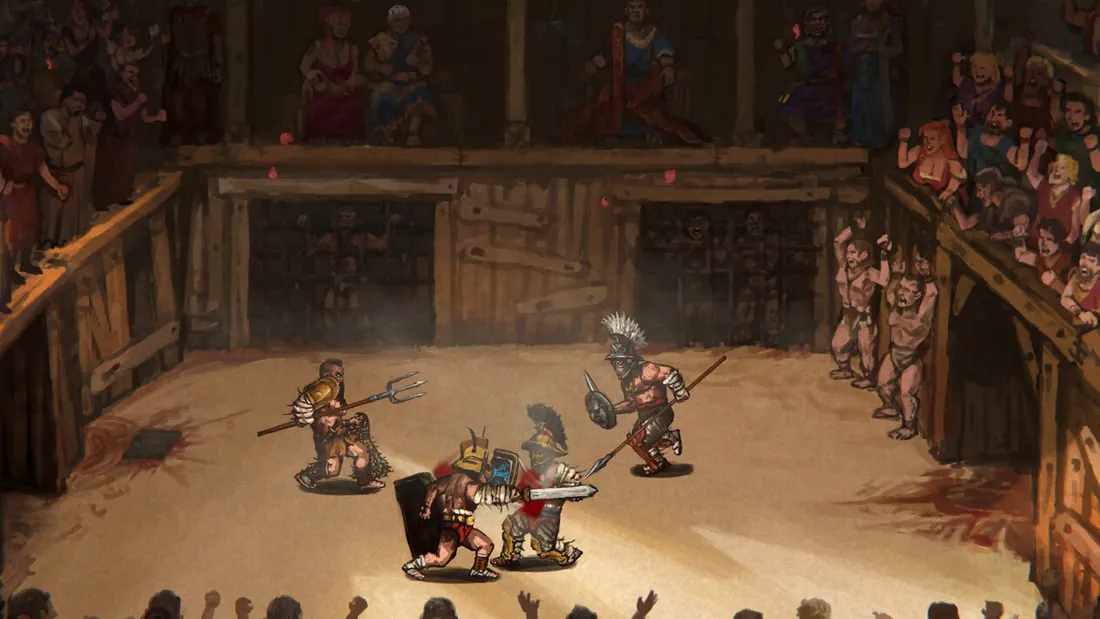
1. Buying every cheap slave in the first market
Each gladiator adds 1 coin per day to upkeep. That sounds trivial until you own five fighters on day 20 and the arena purses are still 20-55 coins. A cheap recruit also consumes Quarters time, training slots and Infirmary space.
Buy for a role, not for a bargain. In the opening, one sturdy fighter and one backup is enough. The first ten days build order → explains which of the three starting recruits to take.
2. Treating upkeep as a late-game problem
The GENERAL tab gives the exact formula: 1 coin per day, plus 1 per gladiator. At three gladiators that is 4 coins per day before staff, equipment or healing. Over a 30-day stretch it is 120 coins, which is more than a Palus and almost two Doctore hires.
Count the daily burn before every purchase. A recruit priced at 35 coins actually costs 35 plus every day you keep them. The money and upkeep guide → has a simple break-even table.
3. Booking a Fatigue-3 fighter because the purse is good
Patch 3 sets arena injury risk by Fatigue: 3 is 25%, 4 is 50%, 5 is 100%. A 55-coin purse does not compensate for a five-day Infirmary stay and lost training.
Fatigue 2 is the normal working state. Fatigue 3 is acceptable only for a low-risk matchup you expect to win quickly, and never for a To-the-Death bout. Fatigue 4 is an emergency; Fatigue 5 is a scheduled injury.
4. Leaving the Infirmary early
Early discharge looks efficient because the injury icon disappears. It is not. Patch 5 changed the rule: leaving early removes injuries proportional to the recovery time already served, then restores Fatigue to its pre-admission value. You pay the admission, get partial healing and lose the rest.
Finish the stay unless the gladiator is needed for a run-saving fight. In practice, almost no early fight is worth a second Infirmary bill.
5. Training combat before building the Palus
The Palus costs 60 coins and raises training speed by 20%. If your first three skill ranks take 9 days total, the Palus saves roughly 2 days. Those days are another arena purse, another recovery cycle or another market refresh.
Build the Palus before the second combat skill, not after. The training guide → covers the exact stacking with the Doctore.
6. Delaying the Doctore for a weapon
The Doctore costs 80 coins and accelerates every training block for the rest of the run. A weapon costs 25-75 coins and helps one fighter until they die.
If you can protect the 80 coins without skipping upkeep, buy the Doctore first. The whip can double training speed for two days, and Patch 5 removed its morale penalty. Patch 7 also removed the extra Fatigue from the training bonus, which makes the hire even cleaner.
7. Chasing every 20-coin exhibition
Exhibition matches are useful for keeping rusty fighters sharp and generating a small base income. They are not a substitute for a real purse. Patch 7 sets the base exhibition reward at 20 coins, plus 3 coins for each arena victory.
A 20-coin fight that adds 2 Fatigue can cost more in recovery than it pays. Use exhibitions when the roster is already resting, not as the main income plan.
8. Ignoring the crowd before the fight
Crowd mood decides how many of your two calls actually help. Liked helps twice, Indifferent helps once, Disliked helps zero. On Ruthless the crowd never starts Liked, so a Disliked card is a warning, not flavour text.
Check the crowd line on the fight card before accepting. If the purse is marginal and the crowd is against you, the fight is worse than the number suggests.
9. Waiting for a morale warning to become a refusal
Low morale escalates. The INFO card shows the current low-morale trait: Theft means the gladiator steals coins, Refusal to Fight removes them from bookings, and a suicide risk percentage appears after several bad days.
Act on the first warning. Pleasure House time, a favourable fight or a morale reward can reset the slide. A dead gladiator cannot be repaired.
10. Buying armour before the fighter has skills
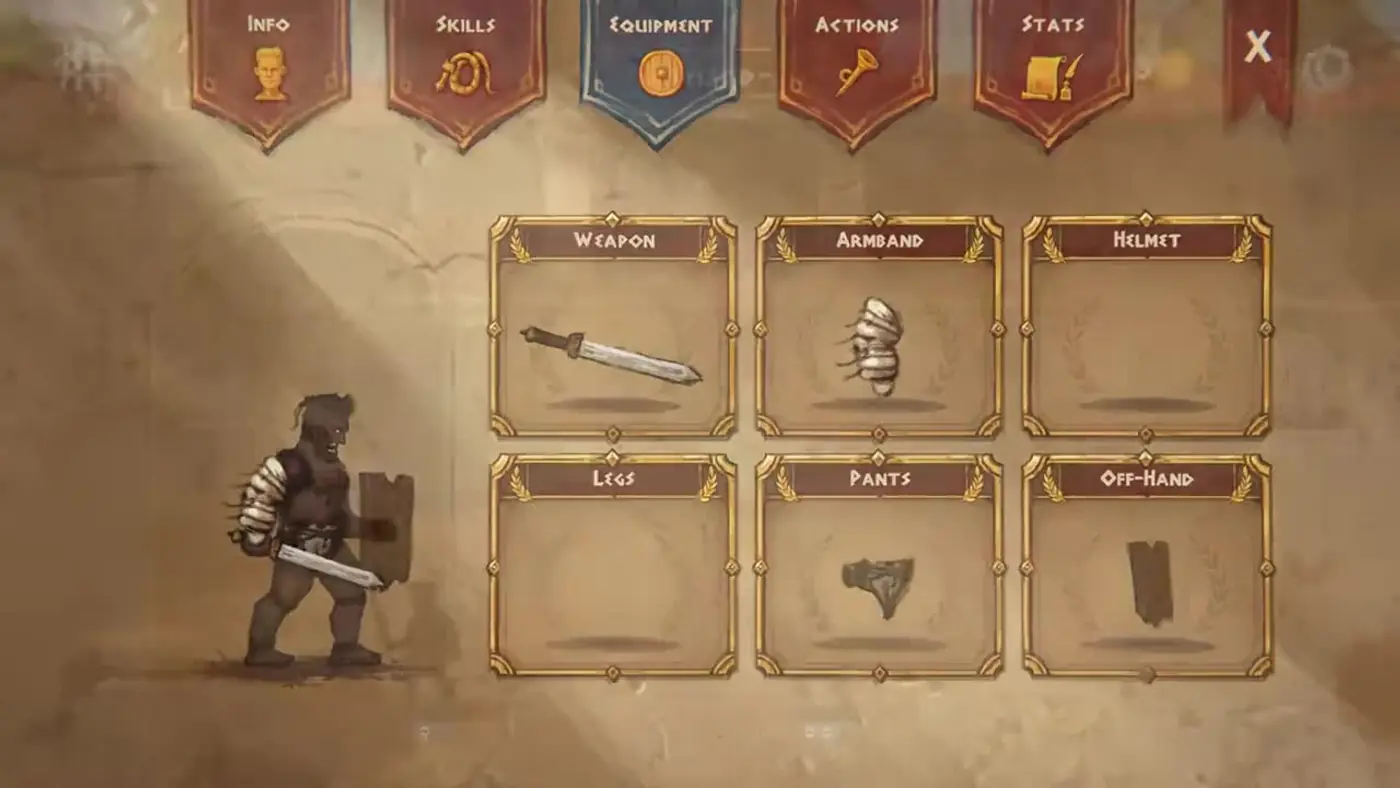
Armour improves block chance, block damage and damage reduction. It does not fix a 3-day training gap or a bad class matchup. A well-armoured fighter with Combat rank 1 still loses to a trained opponent.
Spend on training and buildings until your main fighter has two combat skills at a useful rank. Then buy equipment that covers the class weakness, not the highest price tag.
11. Taking To-the-Death fights for a normal purse
To-the-Death removes the surrender safety valve. It is appropriate when the purse is exceptional, the matchup is favourable and the gladiator is expendable. It is not appropriate for your best earner on a 55-coin card.
Patch 1 also sets the base injury chance at 10% on a win and 40% on a loss. Those numbers are survivable at Fatigue 0-1 and unacceptable at Fatigue 4.
12. Spending the reserve
Every run needs a coin buffer for an unplanned Infirmary stay, a market refresh or a tax bill. A reserve of 30-50 coins in the opening is enough to absorb one mistake. Later, the reserve should cover several days of upkeep plus one healing cycle.
If you have no reserve, you are one bad fight away from debt. Cassius can push you into debt rather than ending the run immediately, but debt compounds the same problem.
The one-page rule set
| Mistake | Cheapest fix |
|---|---|
| Too many recruits | Cap the roster at 3 until income supports 4 |
| Fatigue-3 booking | Rest first; Fatigue 2 is the working state |
| Early Infirmary exit | Finish the stay |
| No Palus | Buy it before the second combat skill |
| No Doctore | Buy after the first stable earner |
| Chasing small purses | Compare purse with recovery days |
| Ignoring crowd | Read the mood line before accepting |
| Low morale | Treat the first warning as urgent |
| Gear before skills | Two combat skills first |
| To-the-Death for 55 coins | Save it for exceptional purses |
| No reserve | Keep 30-50 coins in the opening |
Official source: Dominus Gladiatus patch notes ↗
Official source: Steam store ↗
Official source: Steam achievements ↗
FAQ
What is the single biggest beginner mistake? Booking a tired fighter. Fatigue is visible, the injury risk is documented, and the loss is entirely avoidable.
Should I sell a weak gladiator? Yes, if they are consuming upkeep and training time without a path to the roster. Selling is done from the Dominus tab after Patch 5.
How many gladiators should I own early? Two or three. Four is viable only when arena income and Quarters capacity support the daily upkeep.
More Dominus Gladiatus Guides
A Dominus Gladiatus arena readiness checklist: Fatigue, injuries, Health, morale, crowd, matchup, rules and reserve before you accept a purse.
Dominus Gladiatus best build guide: Health vs damage, skill order for Murmillo, Secutor and Scissor, Veteran bonuses, equipment priorities and team-fight roles.
Dominus Gladiatus best gladiators tier list: Health, talents, temperament and class value, plus when to buy, keep or sell a recruit from the Slave Market.
Dominus Gladiatus class guide: Murmillo, Secutor and Scissor strengths, skill synergies, Retiarius and Hoplomachus matchups, and the best first class.
How crowd favor works in Dominus Gladiatus: Liked, Indifferent and Disliked calls, two calls per fight, stones and food, favored immunity and Ruthless rules.
All six Dominus Gladiatus Domini: Titus Aurelian, Khepri Setekh, Cassius Lysandros, Aurelia Zahara, Livia Calpurnia and Decimus Amborix, powers and counterplay.
How Dominus Gladiatus endgame contracts work after the Grand Tournament: 10-fight batches, 1v1 to 5v5, beast spectacles, rising upkeep and retirement.
Dominus Gladiatus equipment guide: weapon, shield, helmet, legs, armband and pants stats, block chance vs damage reduction, weapon range and spending priority.