
Dominus Gladiatus Endgame Contracts Guide
How Dominus Gladiatus endgame contracts work after the Grand Tournament: 10-fight batches, 1v1 to 5v5, beast spectacles, rising upkeep and retirement.
Winning the Grand Tournament does not roll credits and delete the Ludus. The Day 1 update turned the ending into a repeatable contract loop: batches of ten arena fights, team sizes from 1v1 to 5v5, To-the-Death bouts and beast spectacles. The loop is more expensive than the campaign because every new batch raises upkeep and refreshes the rival Domini's powers.
Quick answer
After the final, take contracts you can finish without a death, keep a five-deep roster only if the coins support it, and treat each new batch as a cost increase. Beast fights pay well but test a different defence than human duels. Retire only when you want the achievement summary, not because the save has run out of content.
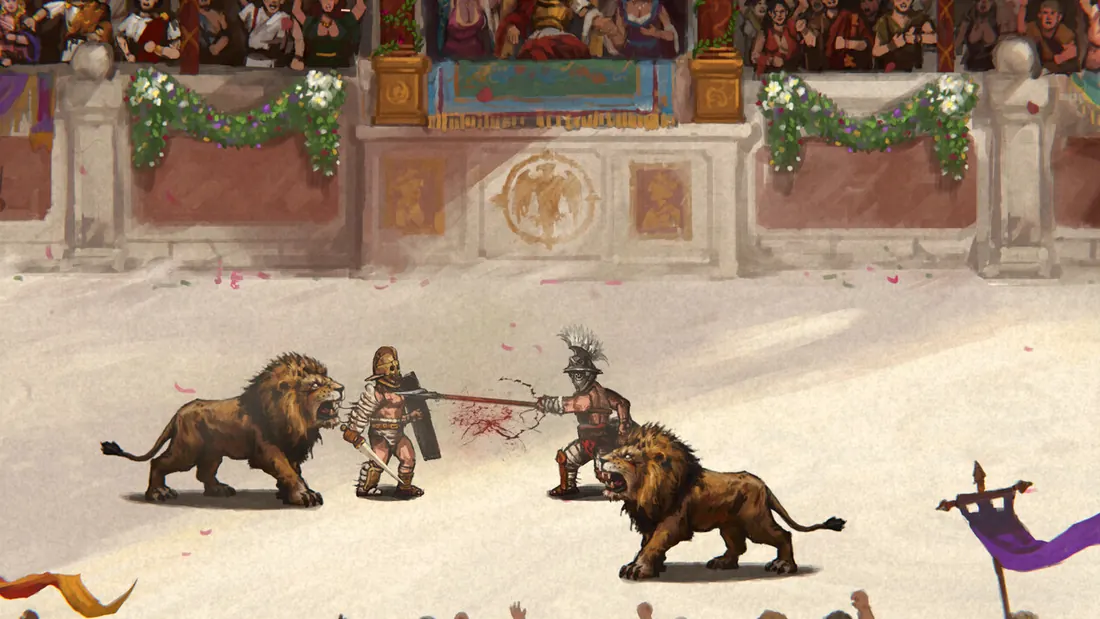
What unlocks after the Grand Tournament?
The Day 1 notes describe the post-win state:
- Arena contracts return as batches of ten fights.
- Team sizes range from 1v1 to 5v5.
- Some contracts are To the Death; others allow surrender.
- Beast spectacles appear, including lions and elephants.
- A new batch arrives roughly every 3-4 days.
- Each batch raises Ludus upkeep and refreshes the Dominus Powers.
- Rejected contracts are tracked separately.
- You can retire as Dominus and review an achievement summary.
That is a survival loop, not a victory lap. The contracts assume you already have a tournament-grade roster, then ask you to field it more often while the fixed costs climb.
Official source: Dominus Gladiatus Day 1 announcement ↗
How does a ten-fight batch work?
A batch gives you ten contract slots. Each slot lists a team size, rules, purse and opponent. You choose which ones to accept; you are not forced to fight all ten, and rejected contracts are counted separately.
Three planning rules:
- Match the contract to the roster you have tonight, not the roster you want by day 200. A 5v5 with two injured fighters is a loss before it starts.
- Spread Fatigue across the batch. A win adds 1 Fatigue and a loss adds 2. Ten fights in quick succession will push even a deep roster into the 3-5 danger band unless you rotate.
- Leave one slot unused if the alternative is a Fatigue-5 fighter. A skipped contract costs opportunity; a dead gladiator costs the run's income.
The batch timer is the real constraint. If the next batch arrives in three days and you have four fighters at Fatigue 3, you cannot clear the current board safely. Accept the smaller purse and recover.
Why does upkeep rise with each batch?
The Day 1 notes say each new batch increases Ludus upkeep. The campaign formula starts at 1 coin per day plus 1 per gladiator; the post-game batches raise the base, so the same roster becomes more expensive over time.
That changes roster math:
| Situation | Campaign thinking | Contract thinking |
|---|---|---|
| Extra gladiator | Adds training and arena depth | Adds permanent daily cost |
| 5v5 contract | Rare, prestige fight | Recurring option that needs five bodies |
| Expensive equipment | One-time power spike | Replaced when the wearer dies |
| Reserve | Covers one bad fight | Must cover several batches of healing |
A five-gladiator roster is not automatically correct after the final. If you only accept 1v1 to 3v3 contracts, the extra bodies are pure upkeep. Build the roster for the contract sizes you actually intend to take.
The money guide → covers the daily burn and the reserve target in more detail.
How should you build for 1v1 to 5v5?
Team fights reward different skills than solo bouts. You need bodies that can absorb focus, not just one carry with high damage.
- 1v1: your best duelist, best equipment, safest Fatigue. This is where the tournament carry still earns.
- 2v2: one durable fighter plus one damage dealer. The durable fighter buys time for the second to finish.
- 3v3: class coverage starts to matter. A Retiarius or a heavy shield can neutralise your usual plan.
- 4v4 and 5v5: depth and morale matter more than a single stat line. A weak fifth fighter can lose the fight before the carry acts.
Do not field five fighters just because the contract allows it. Field the number whose combined Fatigue and morale you can restore before the next batch.
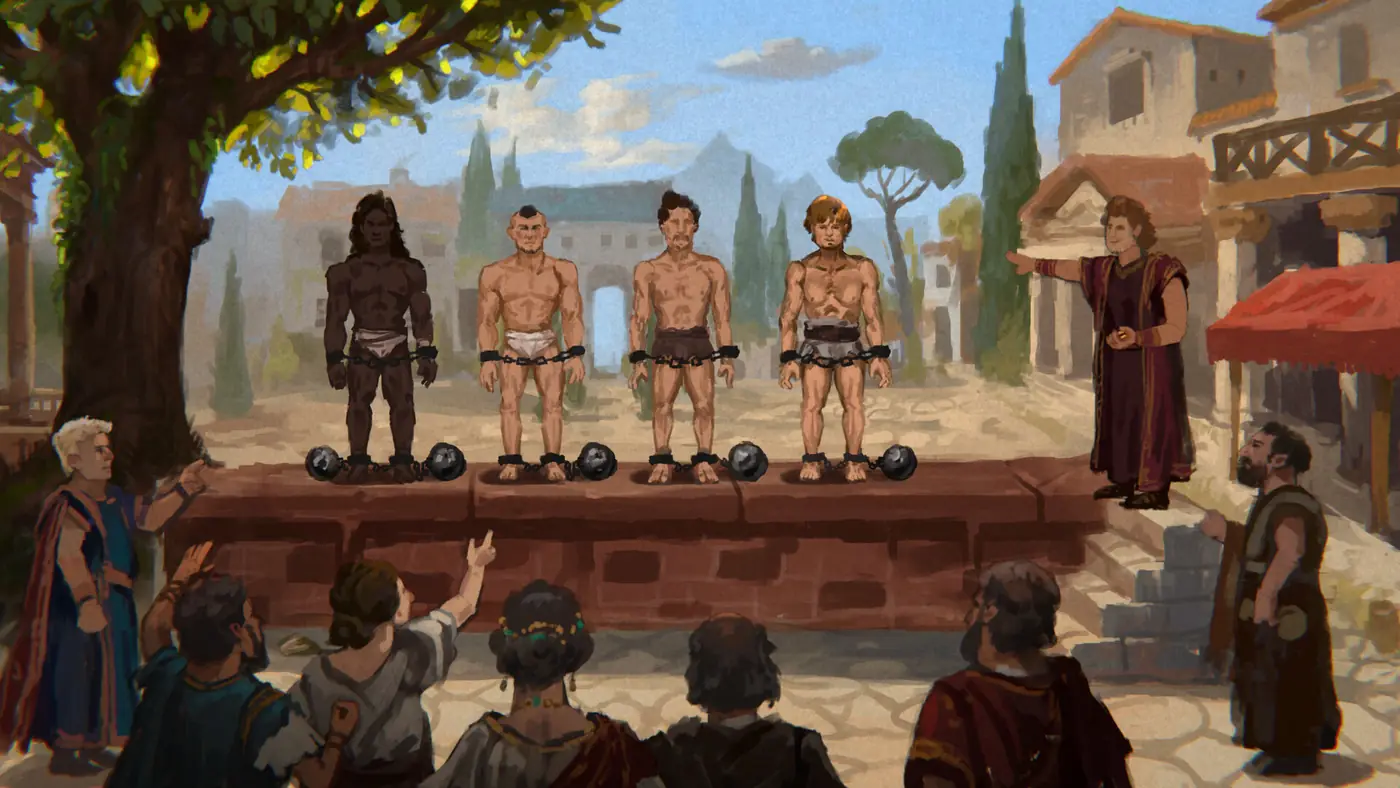
Are beast spectacles worth the purse?
Beast fights pay more than routine human contracts. In the full Ruthless run I watched, a lion spectacle paid 200 coins, roughly four times a standard 50-coin purse. The purse is real; so is the risk.
Beasts change the defensive question. A shield block plan that works against a sword can be less reliable against a charging animal, and the crowd may react differently to a beast show. The Day 1 notes also mention elephants, which implies a heavier damage profile than the lion.
Treat a beast contract as a headline fight:
- Send a fighter at Fatigue 0-1, not 2.
- Clear injuries first. A beast hit on an injured fighter is how deaths happen.
- Accept that the purse is compensation for risk, not free money.
- Do not send the only copy of your best equipment unless you can replace it.
When is To-the-Death acceptable?
To-the-Death is a tool for exceptional purses and expendable fighters. It is not a default setting for the post-game.
Use it when:
- The purse is at least double a safe alternative.
- The fighter has a replacement at comparable training.
- Fatigue is 0-1 and Health is full.
- You have already secured the batch's income.
Skip it when the fighter is your only high-rank carry, when the crowd is Disliked, or when an injury would leave you unable to field the next batch. A dead gladiator also gets a funeral and damages Ludus morale, so the hidden cost is larger than the lost unit.
Patch 5 made gladiator deaths affect the whole Ludus. A To-the-Death loss can turn a stable roster into a refusal spiral even if the purse covered the funeral.
What does Retire as Dominus do?
Retirement is an ending option, not a reset button. The Day 1 notes say you can retire as Dominus and review an achievement summary. Use it when you are done with the save or want to close the run cleanly.
Before retiring, check the achievement list. The 23 achievements include campaign wins with each of the six Domini, power usage, staff interactions and milestone fights. If you are chasing completion, retiring early may lock you out of the remaining victory achievements.
The achievements guide → lists all 23 with their unlock conditions.
A sustainable post-game routine
A contract batch can be cleared without emptying the Infirmary if you follow a rotation:
- Open with two low-risk 1v1 or 2v2 contracts to generate cash.
- Spend one day on Quarters and morale recovery.
- Take the medium 3v3 contracts with the healthiest three fighters.
- Leave the 5v5 and beast contracts for the second half of the batch, after Fatigue is known.
- Bank enough coins for one full healing cycle before the next batch.
- Reject contracts that require a fighter you cannot replace.
This is slower than accepting everything. It is also the difference between a Ludus that survives ten batches and one that dies on batch three.
Official source: Dominus Gladiatus achievements ↗
Official source: Steam store ↗
FAQ
How many contracts are in a batch? Ten fights per batch, with team sizes from 1v1 to 5v5.
Do I have to accept every contract? No. You can reject contracts, and the game tracks rejected offers separately.
How often do new batches appear? Roughly every 3-4 days according to the Day 1 notes.
Can I keep playing after retiring? Retirement is an ending summary. Continue the save if you want to keep taking contract batches.
More Dominus Gladiatus Guides
Dominus Gladiatus best build guide: Health vs damage, skill order for Murmillo, Secutor and Scissor, Veteran bonuses, equipment priorities and team-fight roles.
Dominus Gladiatus class guide: Murmillo, Secutor and Scissor strengths, skill synergies, Retiarius and Hoplomachus matchups, and the best first class.
How crowd favor works in Dominus Gladiatus: Liked, Indifferent and Disliked calls, two calls per fight, stones and food, favored immunity and Ruthless rules.
All six Dominus Gladiatus Domini: Titus Aurelian, Khepri Setekh, Cassius Lysandros, Aurelia Zahara, Livia Calpurnia and Decimus Amborix, powers and counterplay.
Twelve Dominus Gladiatus tips that prevent early run deaths: fatigue management, market discipline, morale warnings, crowd calls and upkeep traps.
Dominus Gladiatus equipment guide: weapon, shield, helmet, legs, armband and pants stats, block chance vs damage reduction, weapon range and spending priority.
How exhibition matches work in Dominus Gladiatus: Ordinator setup, 20-coin base reward, +3 per arena win, cooldowns and when the low-risk income is worth it.
Dominus Gladiatus fatigue explained: the 0/5 scale, win and loss costs, 25/50/100% injury risk at 3/4/5, Quarters recovery and Infirmary interactions.