
Dominus Gladiatus Grand Tournament Guide
Prepare for the Dominus Gladiatus Grand Tournament: 165-day milestones, roster depth, rival Domini counterplay, final-week readiness and post-win contracts.
The Grand Tournament is the end of the 165-day campaign: a final test against the rival Domini after months of training, injuries, taxes and market decisions. You do not win it with one overpowered gladiator. You win it by arriving with two or three credible fighters, a solvent Ludus and enough morale and Fatigue headroom to survive a bad bracket day.
Quick answer
Build depth before day 100, keep your best fighter out of unnecessary To-the-Death bouts, and spend the last ten days on recovery and matchup scouting rather than new equipment. The final rewards a roster that can absorb one loss, not a perfect win streak.
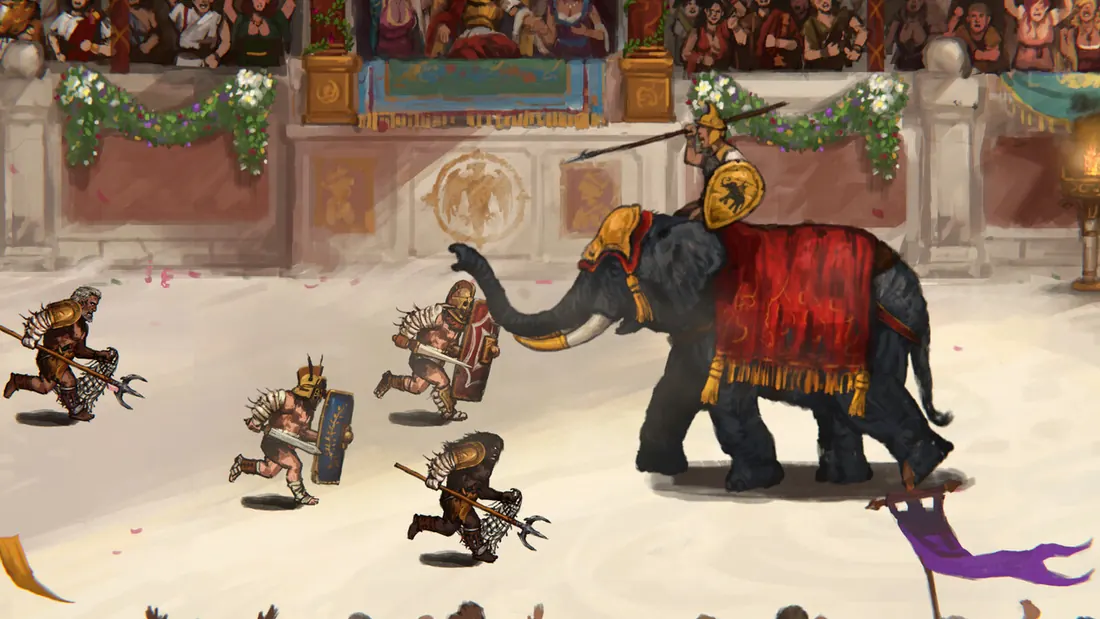
What is the tournament structure?
The campaign runs 165 days against six rival Domini and ends with the Tournament Final. Qualifier bouts exist along the way; the Patch 7 notes adjust qualifier difficulty by 5-10 Health depending on Easy or Hard. The exact bracket you see depends on your save and rival progression, so plan for a sequence of fights rather than one fixed opponent.
Three things are certain from the store description and patch notes:
- The campaign is measured in days, not fights. Every recovery block competes with training and earning.
- The six Domini have distinct powers that interfere with your Ludus, not just their arena fighters.
- Winning unlocks repeatable contracts, so the final is a milestone rather than a hard ending.
Official source: Dominus Gladiatus store page ↗
What should you have by each milestone?
Use these checkpoints to diagnose a run. They are guidelines, not a scoreboard.
| Day | Roster | Training | Economy | Red flag |
|---|---|---|---|---|
| 30 | 2-3 fighters | Combat 1-2, one utility skill | Quarters + Palus | No reserve, 4+ fighters |
| 60 | 3 fighters, one backup | Two combat skills on the carry | Doctore hired | Carry still at rank 1 |
| 100 | 3-4 fighters with class coverage | Main fighter at high Combat, second skill at rank 2+ | Positive daily margin | One injury from debt |
| 130 | 3 credible arena fighters | Coverage for Retiarius and heavy armour | Reserve for two healing cycles | Best fighter at Fatigue 4+ |
| 150-165 | Final roster rested | No new long training blocks | Coins stable | Gambling on To-the-Death |
If you are behind at day 100, do not panic-buy equipment. Sell the weakest fighter, cut upkeep and spend ten days on training and recovery. A smaller, healthier roster closes faster than a large, exhausted one.
Why roster depth beats one carry
A single high-Health champion is efficient until they are injured, poisoned, sabotaged or matched against a hard counter. The tournament format and rival powers are designed to create those days.
Two credible fighters solve most of it:
- One primary earner with the best equipment and the highest Combat rank.
- One counter-pick that covers the class your primary struggles against.
- One emergency body who can take a low-risk qualifier without wrecking morale.
Do not build the third fighter until the first two are trained. Three half-trained gladiators lose to two prepared ones, and each extra body adds 1 coin per day to upkeep.
The classes guide → explains the Murmillo, Secutor and Scissor matchups; the best build guide → covers stat and skill priorities.
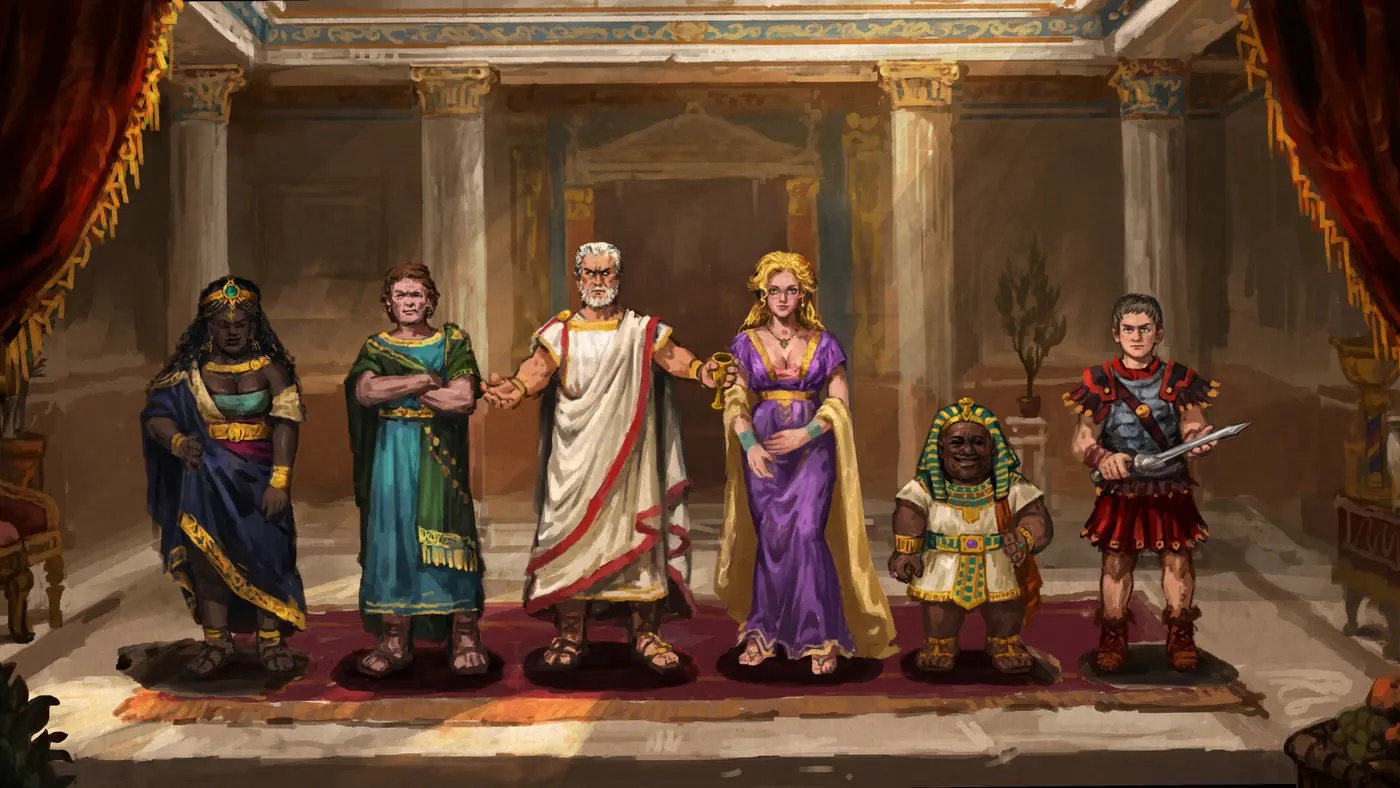
How do you handle the six Domini?
Each rival has a power that changes the run outside the arena. The verified effects are worth planning around:
- Titus Aurelian can rewrite the terms of the coming match and field one additional gladiator. Treat any card against him as a potential outnumbered fight.
- Khepri Setekh reduces slave prices by 15%, which makes market upgrades cheaper while he is relevant.
- Cassius Lysandros can impose taxes that push you into debt instead of forcing an immediate forfeit.
- Aurelia Zahara sabotages training grounds. Paying tribute or offering praise can reduce how often she sabotages you for 10 days.
Livia Calpurnia and Decimus Amborix are themed around poison and psychological pressure, based on their achievement names and in-game power labels. Their exact numbers were not exposed in the build and patch notes I checked, so scout the trait text before committing a key fighter.
The six Domini guide → lists each rival's known power and the preparation that blunts it.
What changes in the final ten days?
The final ten days are a taper, not a sprint.
- Stop starting new multi-day training blocks unless they finish before the final.
- Rest every fighter to Fatigue 0-1. At Fatigue 3 the injury chance is already 25%; at 5 it is 100%.
- Clear all injuries. The Infirmary early-exit rule means a partial stay wastes coins and leaves the fighter compromised.
- Check morale traits. A refusal or theft trait on the eve of the final is a roster problem, not a minor annoyance.
- Buy only consumable upgrades. A weapon that arrives two days before the final is fine; a building that takes three days is not.
- Scout the first opponent's class and Health. Match your counter-pick, not your favourite fighter.
Do not take a lucrative To-the-Death contract in the last week unless the purse solves a real problem. The final is not the place to discover that your primary earner cannot be replaced.
Players often spend their reserve on one last weapon and then cannot afford an Infirmary stay after a qualifier. Keep at least two healing cycles of coins untouched.
Should you play the final on Ruthless?
Ruthless is a planning challenge, not a fair fight. Opponents get 10% more Health and a 20% larger skill budget, the crowd never starts Liked, sabotage is more frequent and a loss pays nothing.
If you are already on Ruthless, compensate with:
- More conservative purse selection in the last 30 days.
- Two fighters with independent training paths, so sabotage or injury cannot stall the whole roster.
- A larger reserve, because losses generate no income.
- Earlier class coverage, since you cannot rely on crowd calls to swing a bad matchup.
If you are on Classic or Forgiving, do not switch difficulty mid-run for the final. The economy and training calendar are calibrated to the difficulty you started.
What happens after you win?
The Day 1 update changed the ending. After the Grand Tournament you can return to the Ludus and take repeatable arena contracts: batches of ten fights, 1v1 to 5v5, including To-the-Death bouts and beast spectacles with lions and elephants. New batches arrive roughly every 3-4 days, raise upkeep and refresh the Domini powers. You can also retire as Dominus and review an achievement summary.
That post-game loop is an economy test. Pre-final, you optimize for one bracket. Post-final, the cost base rises every batch, so the endgame contracts guide → matters more than another arena tier.
Official source: Dominus Gladiatus achievements ↗
Official source: Steam news ↗
FAQ
How many days is the campaign? 165 days to the Grand Tournament Final, followed by repeatable contracts if you continue the save.
Can I win with one gladiator? It is possible on easier difficulties, but one injury or sabotage event can end the run. Two credible fighters is the safer minimum.
Do qualifiers use the same crowd rules? Yes. Crowd mood and calls apply to arena bouts, including qualifiers. Ruthless never starts the crowd at Liked.
Is the tournament the end of the save? No. The Day 1 update added post-win contracts, beast spectacles and a retirement summary.
More Dominus Gladiatus Guides
Dominus Gladiatus best gladiators tier list: Health, talents, temperament and class value, plus when to buy, keep or sell a recruit from the Slave Market.
Dominus Gladiatus class guide: Murmillo, Secutor and Scissor strengths, skill synergies, Retiarius and Hoplomachus matchups, and the best first class.
How crowd favor works in Dominus Gladiatus: Liked, Indifferent and Disliked calls, two calls per fight, stones and food, favored immunity and Ruthless rules.
Twelve Dominus Gladiatus tips that prevent early run deaths: fatigue management, market discipline, morale warnings, crowd calls and upkeep traps.
Dominus Gladiatus equipment guide: weapon, shield, helmet, legs, armband and pants stats, block chance vs damage reduction, weapon range and spending priority.
How exhibition matches work in Dominus Gladiatus: Ordinator setup, 20-coin base reward, +3 per arena win, cooldowns and when the low-risk income is worth it.
Dominus Gladiatus fatigue explained: the 0/5 scale, win and loss costs, 25/50/100% injury risk at 3/4/5, Quarters recovery and Infirmary interactions.
A practical Dominus Gladiatus first 10 days build order: recruit choice, Quarters timing, Palus and Doctore purchases, training blocks and safe arena purses.